Is is Natural or Not?
Many times we look at product labels nowadays and wonder what it is we are reading. Labels sprinkled with -ates, -oxides, -ides, -ites, -ols, -amines, -amones, and -well you get the picture. “Chemicals” tend to get a bad rap because the word tends to mean bad stuff in people’s minds but in actuality all things are made of chemicals. Your body is made up of chemicals, the food you eat is made of chemicals, medications are chemicals, literally everything you see, taste, eat, drink, touch or smell is made up of chemicals. The question is: Is it harmful or helpful? Is it a natural chemical? What exactly is natural? And then we throw out the words Naturally Derived? Are you confused yet? Are you thinking you now need a degree in chemistry to go to the grocery store?
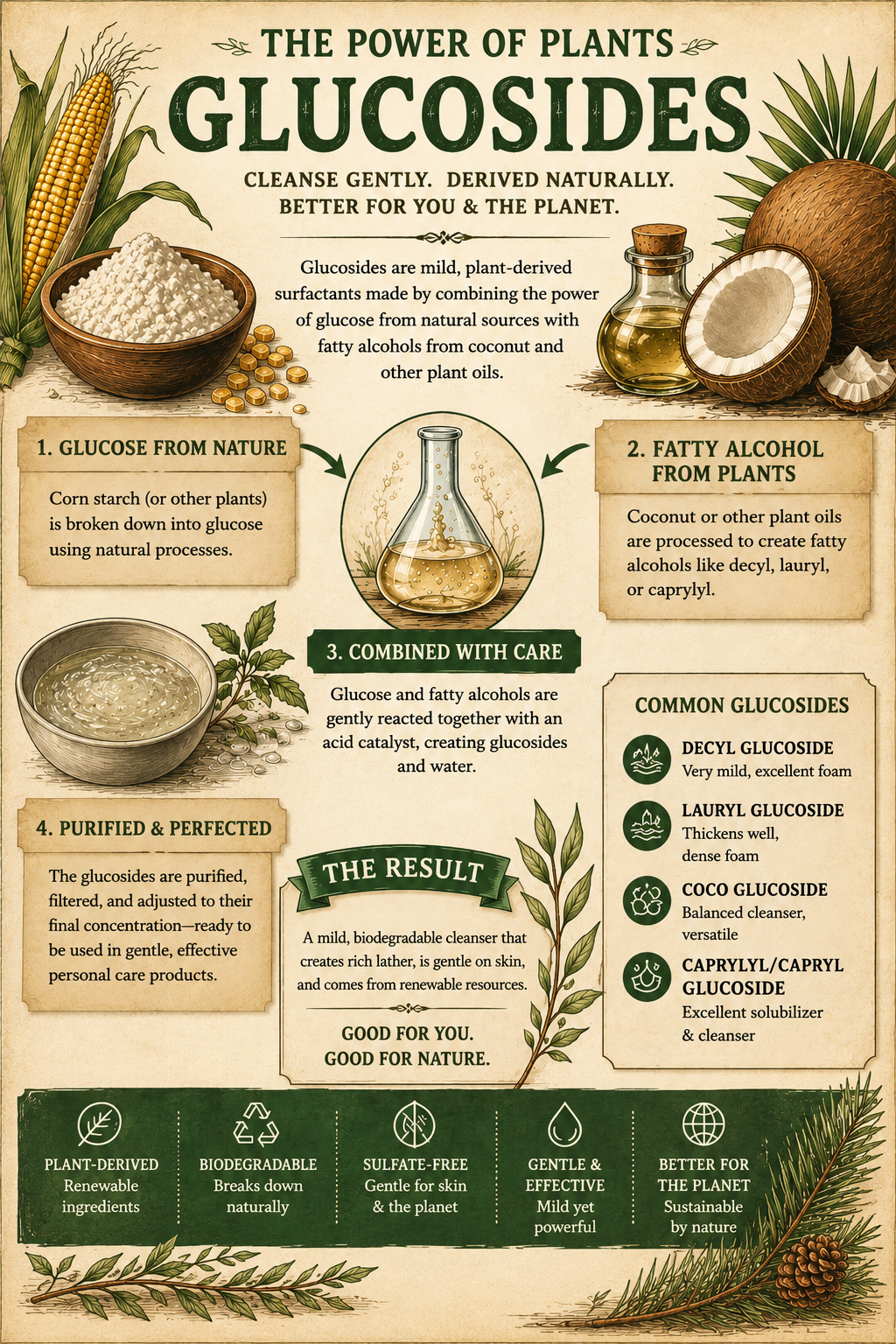
Well today we are going to use the example of Glucosides. Glucosides ultimately come from plants and are considered naturally derived. However, they do require some processing to get to the form that you would use them. I have studied these products very extensively in the last few months because I am currently developing and testing body wash recipes for a new addition to our current product line. As you can see from the graphic included here, glucosides start as two components, glucose and fatty alcohols, both come from sustainable plant sources. Then they are processed. Uh oh, there is another word with a bad rap. Anything processed cant be good can it? In reality very few thing we use do not require some kind of processing to be made into a form we can use. Sugar must be processed from sugar cane or beets, waste water has to be processed to be made potable again, foods are frozen, canned, rendered, pressed, strained, dried or blended. All processed to make them shelf stable so that they can be shipped to your grocery store. It depends on the process as to where it is beneficial or detrimental not the fact that is in processed. Very few products involve tapping a spigot into a tree, opening it and getting the product we use, they have to be changed, yes, even maple syrup starts from a very diluted sap that must be boiled down to the correct concentration for use, in other words, processed.
So Glucosides are naturally derived because their components come from natural sources, they are processed but are very mild and beneficial to the skin.
So bottom line is: Instead of focusing on the ominous name of the chemical or the fact that it is processed, look at the SOURCES of its components and HOW it is processed. Is it Sustainable? Biodegradable? Effective? Beneficial to me?
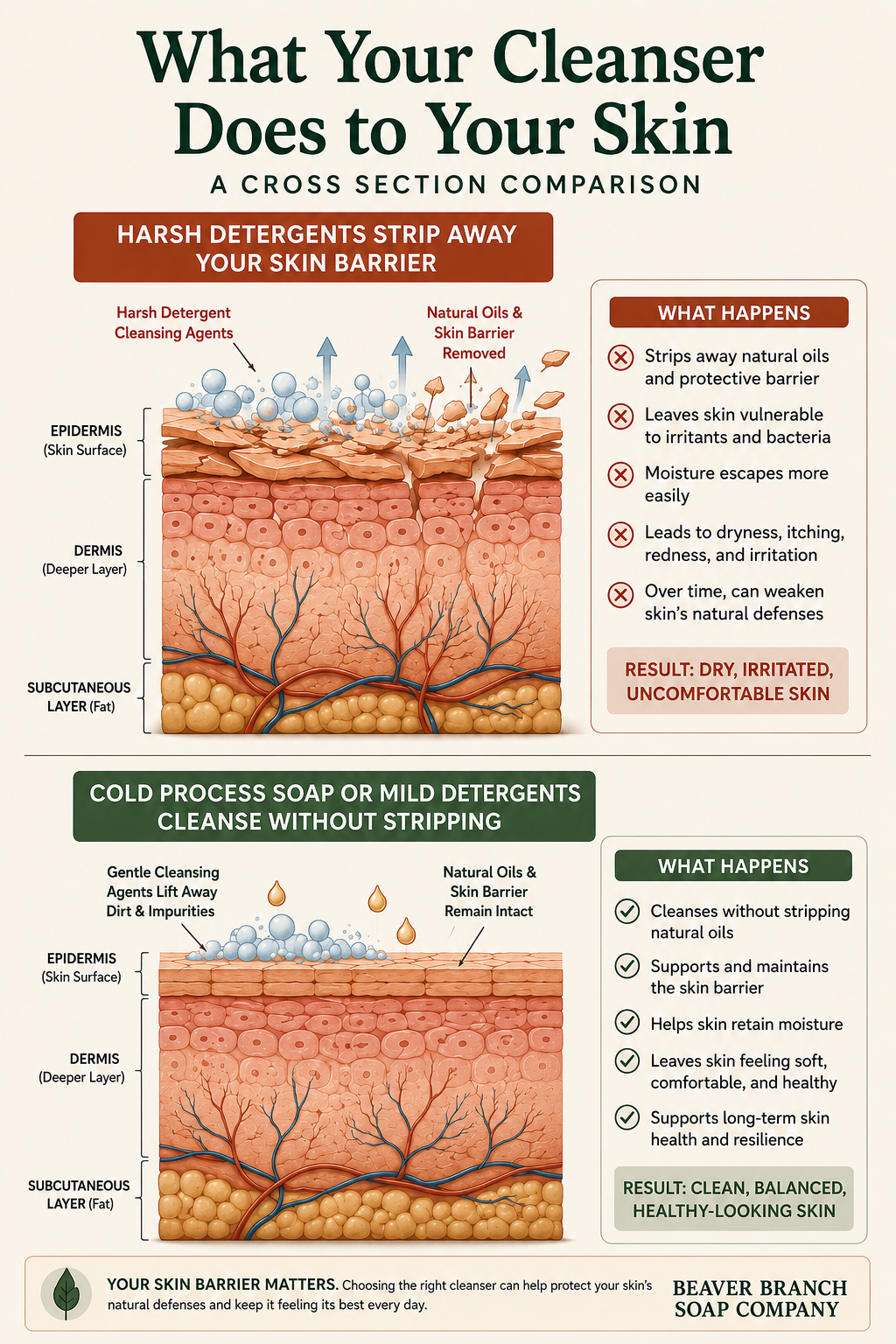
Why Do Harsh Detergents Irritate the Skin?
Think of your skin as kind of a brick or rock wall. The rock or brick is composed of dead skin cells which are continuously being replaced from underneath and sloughed off. Now what does the wall need to stay intact? Right, mortar. There are a multitude of connective substances that make the cells hold together but what “seals the cracks” is an oily material called Sebum. Sebum is produced in the pores and is designed to not only act as a sealant from the outside but it also seals the skin from the loss of moisture from within.
Now about detergent. Water and oil doesn’t mix under normal circumstances but detergents bridge that gap because the detergent molecule has an end that sticks to water (Hydrophilic) and an end that repels water (Hydrophobic) and likes to stick to oils and dirt. Detergents are able to basically stick to globules of oil and dirt on their hydrophobic ends and allow it to still be pulled away into water because their hydrophilic ends anchor to the water and allow the oils and dirt to be rinsed away. This is the same process whether you are washing your dishes, laundry, counters, mopping the floor and of course washing your body.
Remember how we compared the natural oil substance called sebum as the “mortar” of your skin? Harsh detergents strip that away disrupting its ability to seal the skin from not only moisture loss but it also allows a pathway for not only bacteria and viruses which can cause infections but also allergens. Both of these kinds of invaders can trigger an immune response to the foreign substances. This immune response can manifest in a condition called Contact Dermatitis. The skin becomes dry and flaky and the nerve endings in the skin are exposed more which cause pain and itching. To refer back to our other analogy, the mortar is stripped away and the wall is no longer impenetrable.
In a prior blog post I mentioned how all natural soaps processed with lye have a “superfat” percentage which means a certain amount of fat remains in the soap to ensure that the oil in the skin is replenished, reconditioning the skin. Even additives like urea which break down the protein keratin only remove the rough and jagged surface and leaves the skin smooth and uniform again.
There are detergents that are much milder like the natural salt compounds which make up cold process soaps along with glucoside groups that are all plant derived and not synthetic. Harsh lathering agents found in most commercial soaps can be replaced with natural ones like plant glycogen, honey or various other sugars.
Bottom line: Harsh detergents remove the protective layers on your skin while mild and natural detergents clean the skin but maintain or enhance its protective layers keeping out foreign substances that can cause irritation.
The Soap Making Process
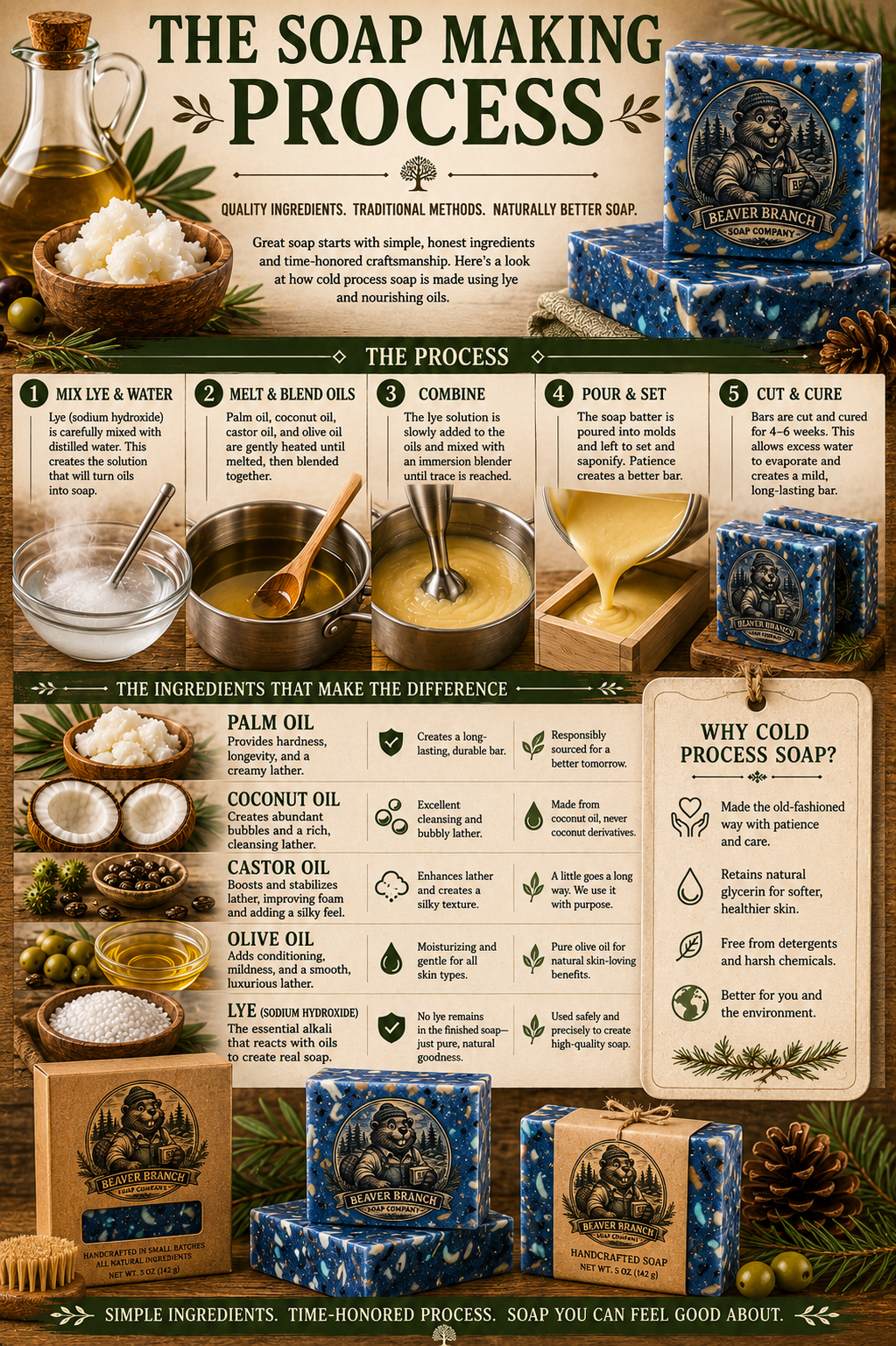
The process for making cold process soap is pretty simple. Oil+Lye+Water=Soap.
Let’s start with the oils. Any oil you use will have a couple of properties that are unique to that oil. 1)How much lye it will take to process it into soap -yes each oil takes a different amount due to the amount of specific components that make up that oil and 2) What specific property that oil will bring to the finished product after processing.
For instance, palm oil serves as a solid base for the soap that hardens and makes the bar last longer. Coconut oil is an excellent cleaner and makes great lather. Castor oil stabilizes the lather from the other oils and gives the soap a smooth feel while olive oil reconditions the skin and adds back moisture and is very mild. Other butters and oils can of course be used from rendered animal tallows to a multitude of other oils and butters all of which add their own foot print to the final product. I use these four because they are readily available, create a very consistent and uniform bar and works well with all kinds of skin types. Specific skin conditioning can be accomplished after the wash with lotions, body butters, sugar scrubs and the like without causing those with oily skin to go into oily overload.
The next set of properties are the additives. I keep my additives to a minimum to keep it more natural but many different things can be added from fruit and veggie purees, mineral pigments, yogurt, clays, exfoliates, sugars, tars and of course fragrances.
Once you have all the above determined it is time to make the soap. You calculate the appropriate amount of lye and water which is measured to only process about 95% of the oils into soap. This serves to allow a small amount of unprocessed oils to stay in the soap for moisturizing the skin as well as ensuring all the lye is processed and none left in the finished product. This extra fat is referred to as the “superfat rating” or in this case 5%, I have had people tell me they can’t handle the lye in lye soap but in reality there is no lye left in it. It’s all processed out. So either they had a reaction to an additive or whoever they got it from didn’t know what they were doing.
Once you have your lye solution and oils measured, your additives ready and the lye solution and oil blend at roughly the same temperature you mix it all together and let it thicken a little (called “trace”) and pour into the mold. After being in the mold for a day or so the bars are cut and set aside to “cure” which basically means the bars dry out more so they will last longer. Usually takes around 4 to 6 weeks. After that time they can be packaged and ready to use or sell.
What is Lye? And is it dangerous?
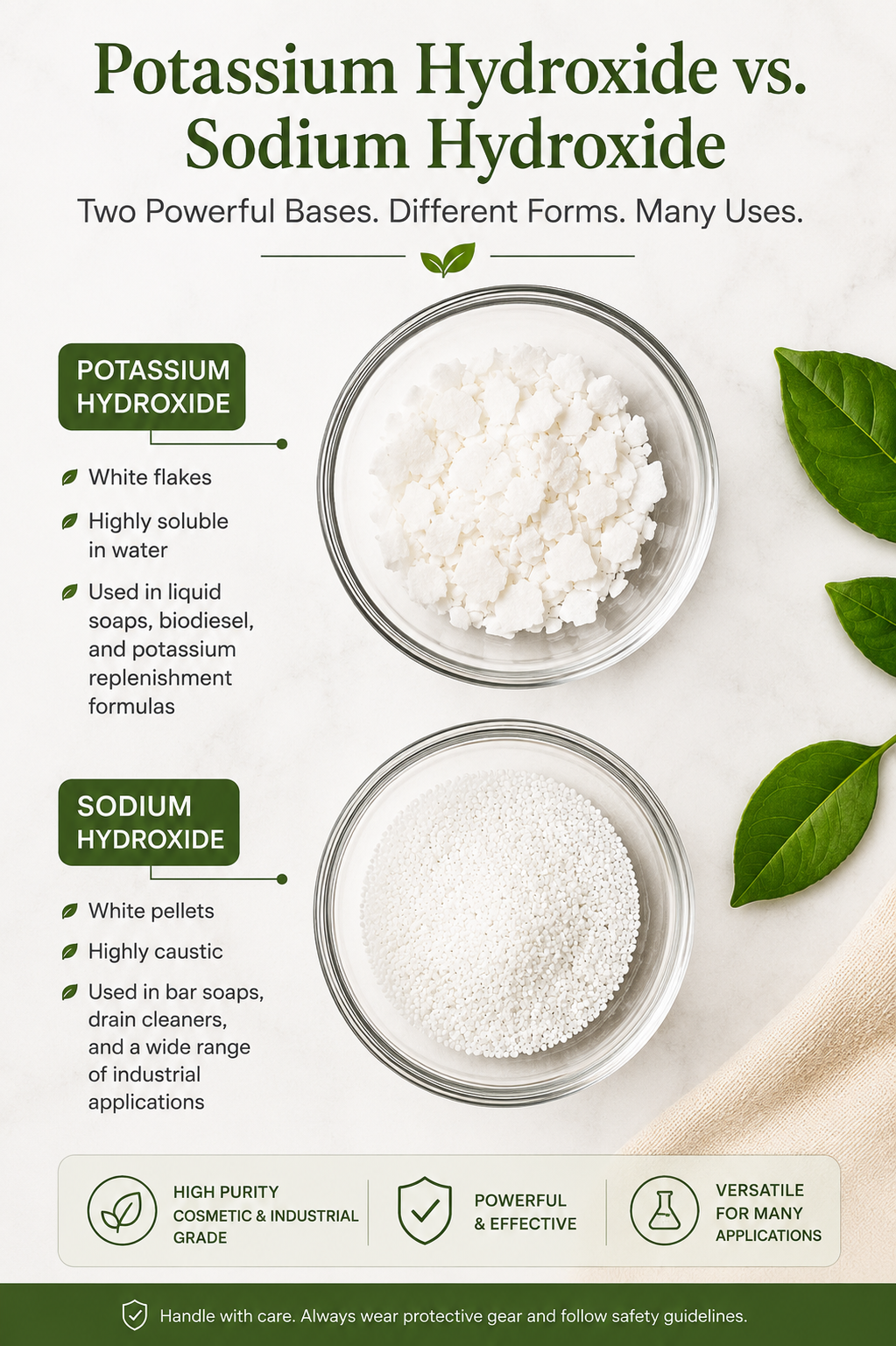
Lye is kind of a general term for a few chemicals that are very alkaline and highly caustic which means they are highly corrosive and can damage or kill living tissue. I know that sounds kind of frightening but with proper safety procedures, they can be perfectly safe to use.
We are just going to talk about the main two that you might even have in your home and not realize it. Both Potassium and Sodium Hydroxide can be used for drain cleaners because their caustic nature breaks down many organic compounds like hair, fats and proteins, clearing the clog and allowing water to flow. Oven and grill cleaners and other cleaning products all have these chemicals in them in varying concentrations. So yes most likely you do have some of these chemicals in your home right now. You wouldn’t want to use them in any other way than intended because they are not pure and have other chemicals mixed in with them.
Proper safety procedures are necessary when handling these chemicals because it can burn the skin. Eye protection and gloves are critical for preventing these chemicals from touching the skin or eyes.
Next time we’ll talk about how these chemicals help us to make soaps and other health and beauty products.
Thanks for reading! -Brian
What is Pine Tar?
Pine tar is a black sticky substance derived from heating resinous pine wood cuttings like roots and stumps in a very low oxygen environment. The wood emits this thick tar made of oils, resins and other organic compounds as it is heated and since there is very little oxygen present these compounds do not burn but are collected and processed.
The uses for pine tar are pretty extensive. On the farm, pine tar can be used to help seal cracked hooves and prevent further infection, before more modern medicines pine tar was used to seal the wounds of farm animals and prevent infection and can also be used to seal wood and act as a preservative and it was also used for maritime water proofing of decks and rope rigging on ships.
Now you may be thinking what in the world is this doing in my skin care products? Pine tar has been used for millennia to treat different skin irritations like psoriasis, eczema, seborrheic dermatitis and many other skin issues. It is anti-inflammatory, antibacterial and antifungal. Pine tar can be added to soaps, lotions and salves to take advantage of these properties.
Since I am a soap maker, not a doctor or dermatologist I cannot claim that my soap can cure these conditions as a whole but I can tell you that the active ingredient contained in it, pine tar, does.
If you want to go into more detail, here is a study that covers it in much more depth than I can.
Thanks for reading and if you have any ideas you’d like to hear more about pertaining to soap making just shoot me an email
Thanks for reading! -Brian
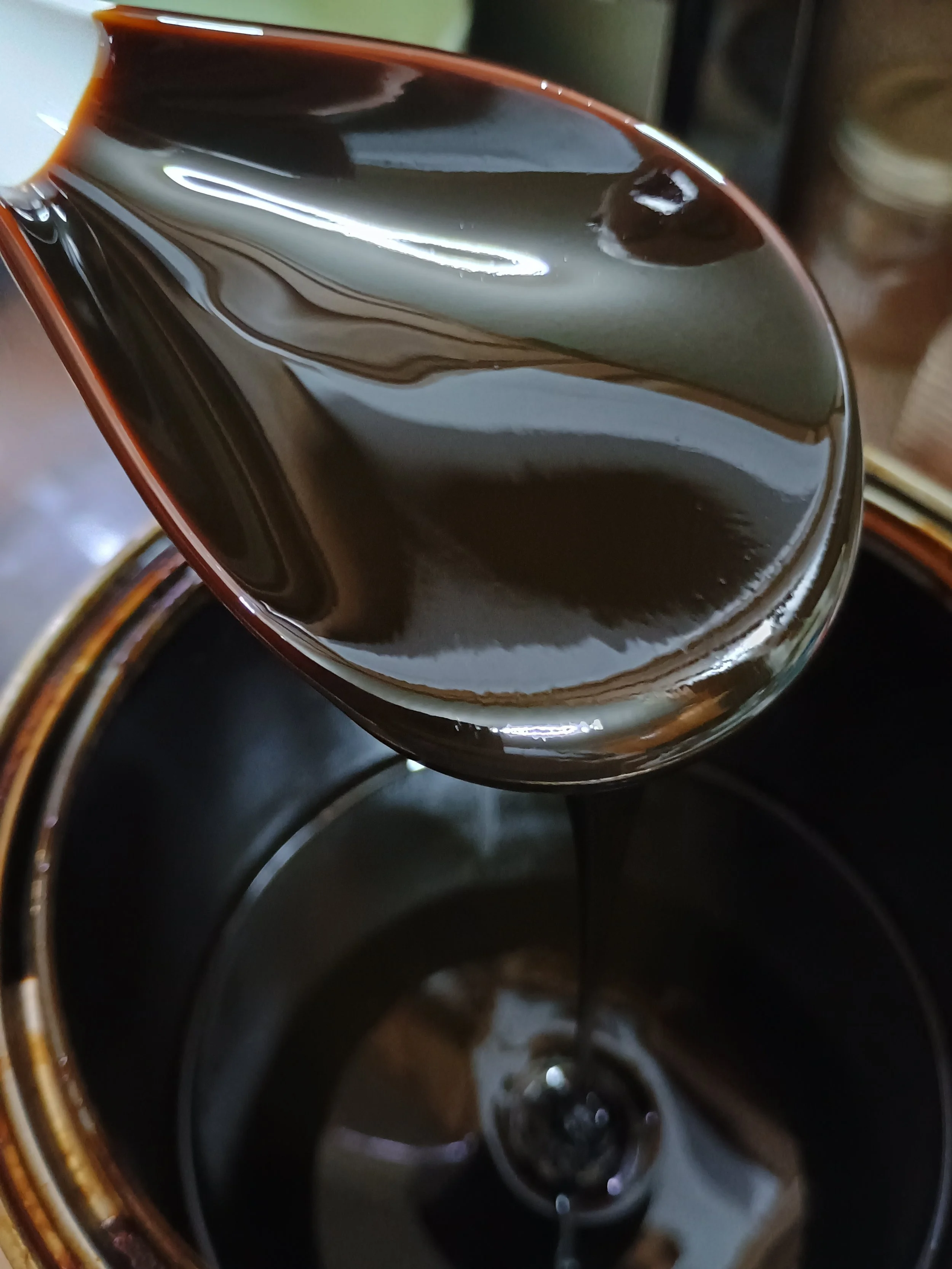
What are the benefits of urea to the skin?
Urea is a chemical produced by most all mammalian life. When animals and you breakdown proteins, ammonia is produced which is highly toxic so the body converts it into urea so it can be safely expelled from the body.
Wait, if urea is a byproduct, then why are we putting it on our skin?
What urea does is draw water into the skin and keeps it there making your skin smooth and silky. Once when I was first beginning to work with urea, I was super saturating a solution of urea and distilled water and stupidly dipped the tip of my finger into the solution. The tip of my finger became as soft as velvet instantly which brings us to the second use for skin. Urea reacts with the keratin in the dead skin cells on the surface and exfoliates them away chemically.
How I add it to my lotion is by heating an amount of water and dissolving the urea in it. This heated solution would form crystals if I let it cool down but I add it to the lotion warm to ensure that the urea solution is incorporated into the lotion without recrystallizing so the lotion remains as smooth as silk.
For more info about urea, here is an article that goes more in depth about chemical makeup and uses.
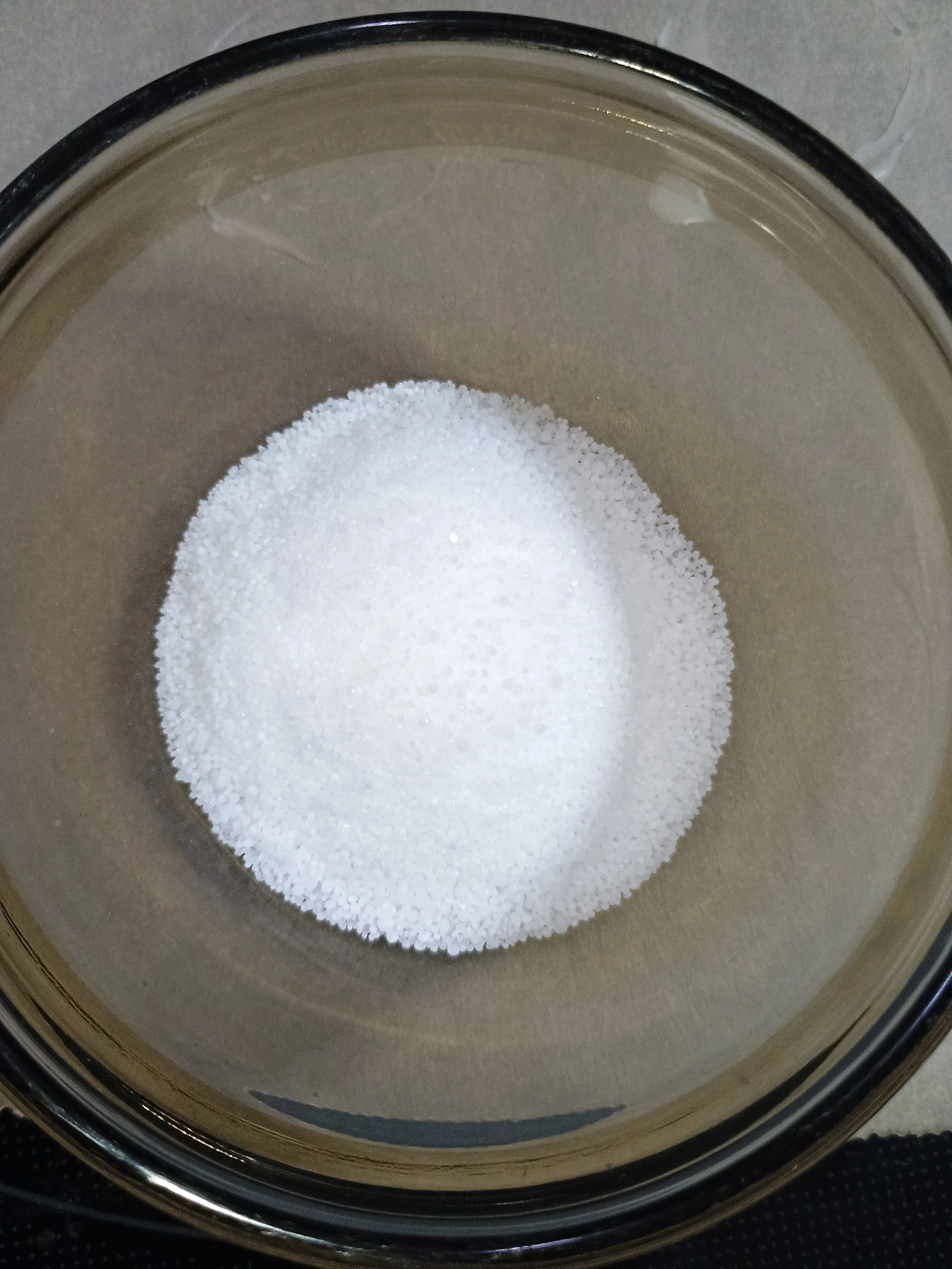
Why Are Cold Process Soaps Superior to Commercial “Soaps”
Notice I put the commercial soaps in quotes because they simply are not true soap. They are a collection of detergents, lathering agents, surfactants and lots of other chemicals that can cause the skin, particularly sensitive skin, to have problems. True soaps start out as an oil blend that is then processed with lye or Sodium Hydroxide to turn the oils into soap through a process called saponification. All the Sodium Hydroxide is used up in the process and there is not any left in the soap after the process is complete, only soap is leftover.
Cold Process soaps are much more gentle to the skin and can be formulated for many different skin types. Oils like tallow, palm, coconut, olive and castor all have their uses in the end product from moisturizing the skin to simply cleaning to making rich lathers. Different butters like cocoa, mango, shea and many others can also add their own elements to the final product. The biggest benefit is that ingredients are natural and you can actually pronounce them.
Most people after trying Cold Process soap feel the difference and will not go back to those commercial soaps they used before.
Assisting and being part of the community…

This week we began sponsorship of the Neosho high school bowling team! These talented kids are heading to State and we’re going to help them get there! This sponsorship will help them pay for traveling, hotel stays, uniforms and food. Can’t wait to see these kids crush it at Missouri State!!!